 Learn Urdu: BolNama
Three-line phrases
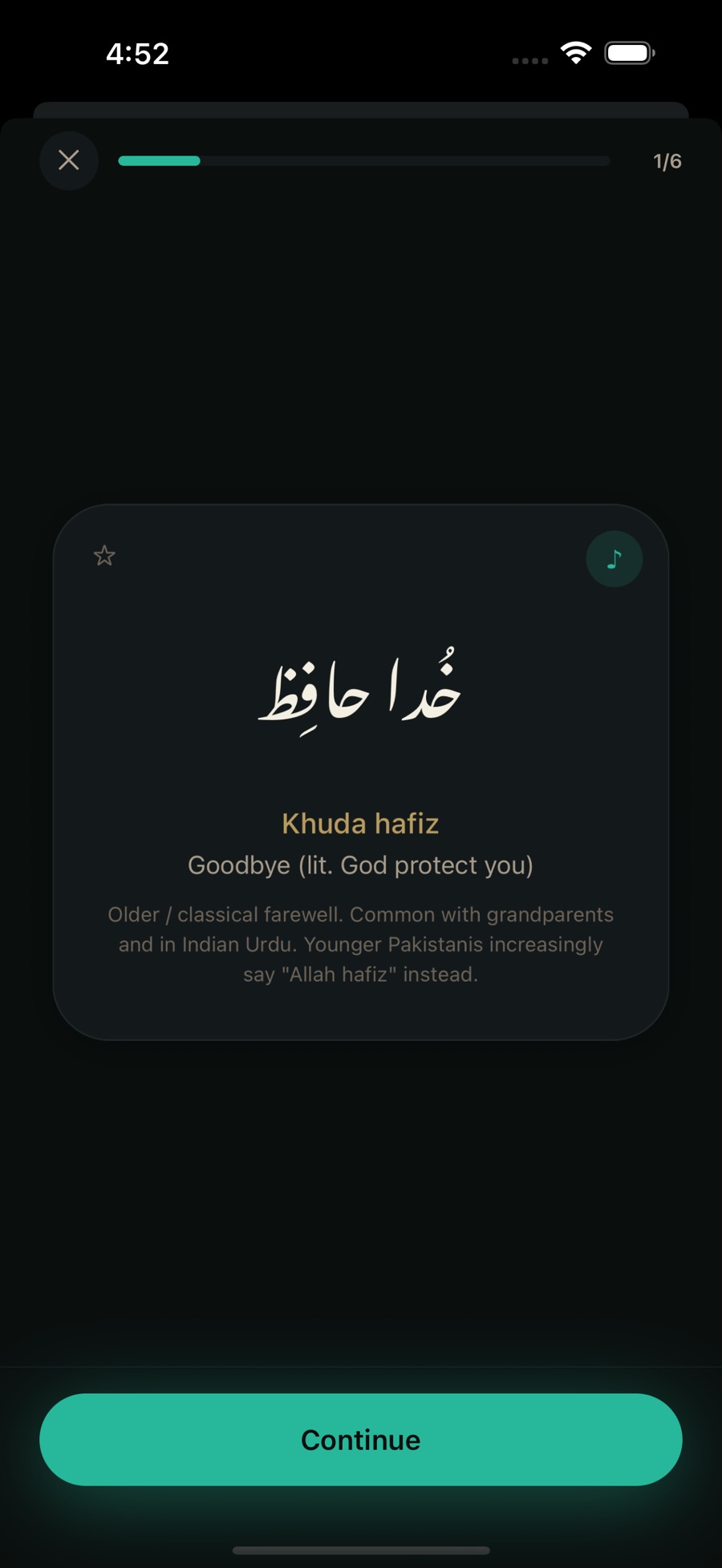
Full Nastaliq script, a diaspora-style Roman line, and the natural English meaning on every phrase. Roman fades as your reading develops.
BolNama is built for heritage learners who understand some Urdu around the family table but cannot confidently read, write, or hold a conversation — and for total beginners who want a clean start.
Free to start — full alphabet and first lessons included. iOS 15.1 or later.
Millions of second- and third-generation Pakistanis in the UK, US, Canada and Australia grew up hearing Urdu but never learned to read Nastaliq or speak with confidence. Generic language apps rarely help — most don't even offer Urdu.
Every claim below comes straight from the app itself — no filler features, no gimmicks.
Full Nastaliq script, a diaspora-style Roman line, and the natural English meaning on every phrase. Roman fades as your reading develops.
Tap once and the same phrase rephrases for tum or aap, masculine or feminine speaker. No other Urdu app has this.
Native Pakistani Urdu audio on every phrase, bundled inside the app — it plays even on a long flight with no signal. Two switchable voices, male and female.
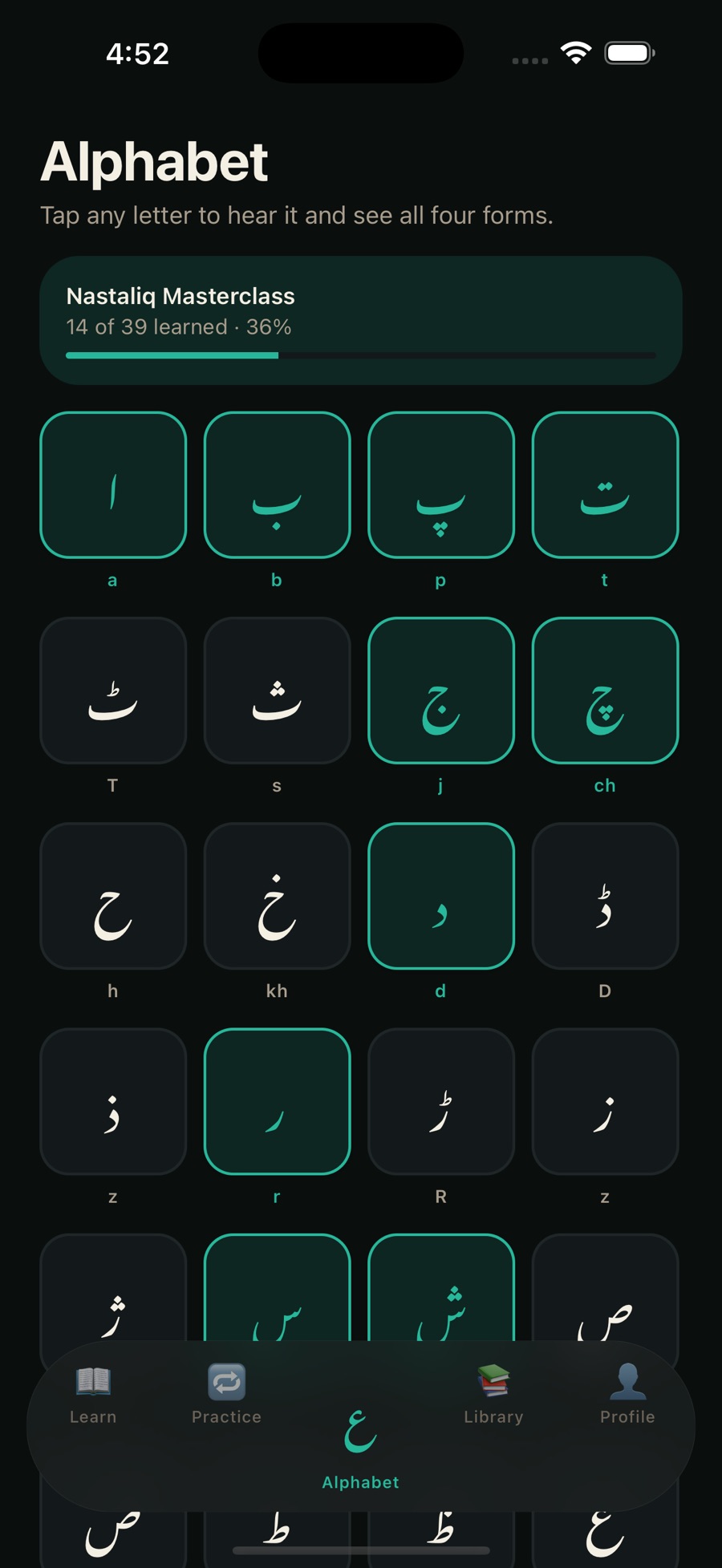
Every letter in all four positional forms — isolated, initial, medial, final — the way the script actually behaves on the page. Tap a letter, hear it, see real example words.
Built on FSRS, the algorithm serious flashcard learners use, tuned to take up to thirty percent less time per word than older systems.
Greetings and family, meeting in-laws, chai time, Eid, weddings, condolences — plus short stories, classic couplets and cultural notes that explain why, not just what.
Three screens from BolNama: your daily path, the Nastaliq alphabet grid, and a short story annotated line by line.
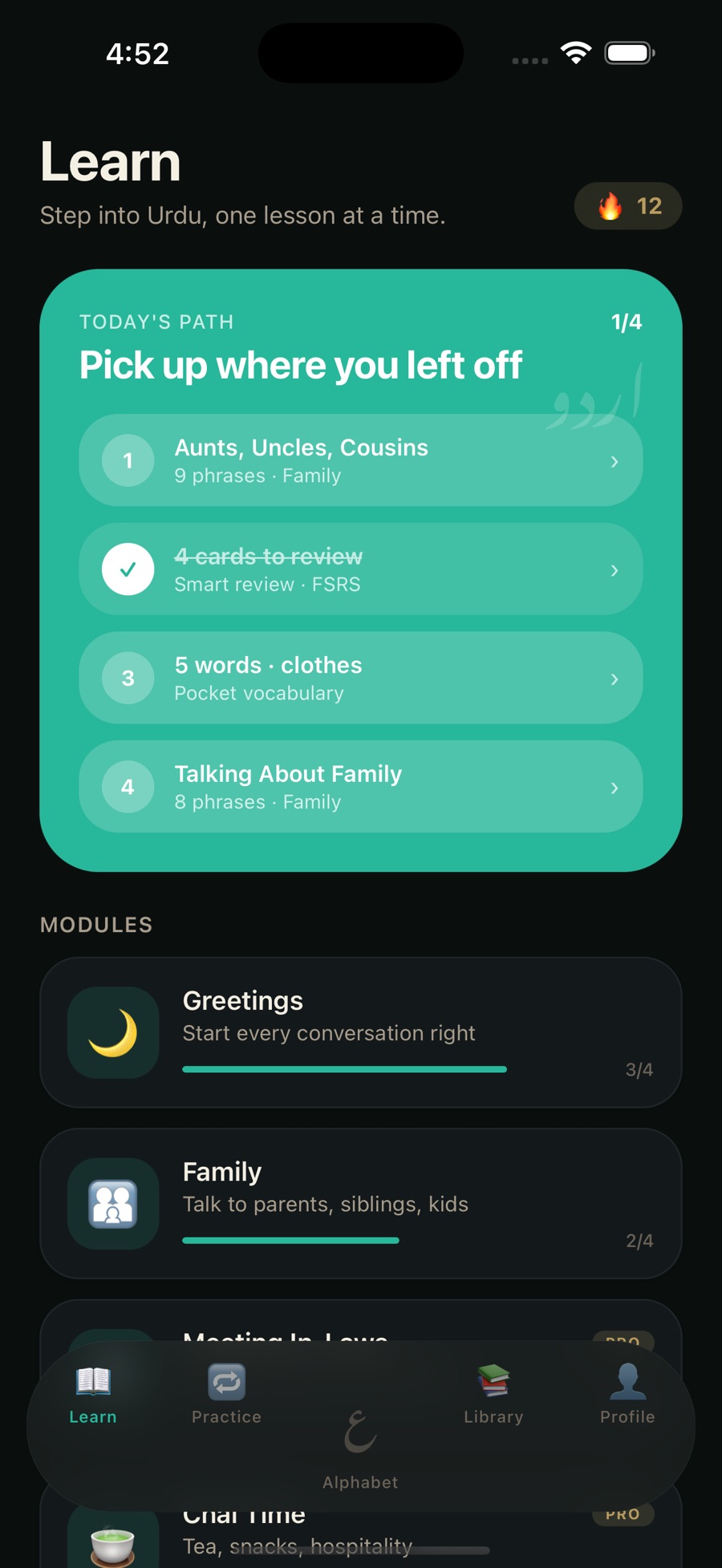
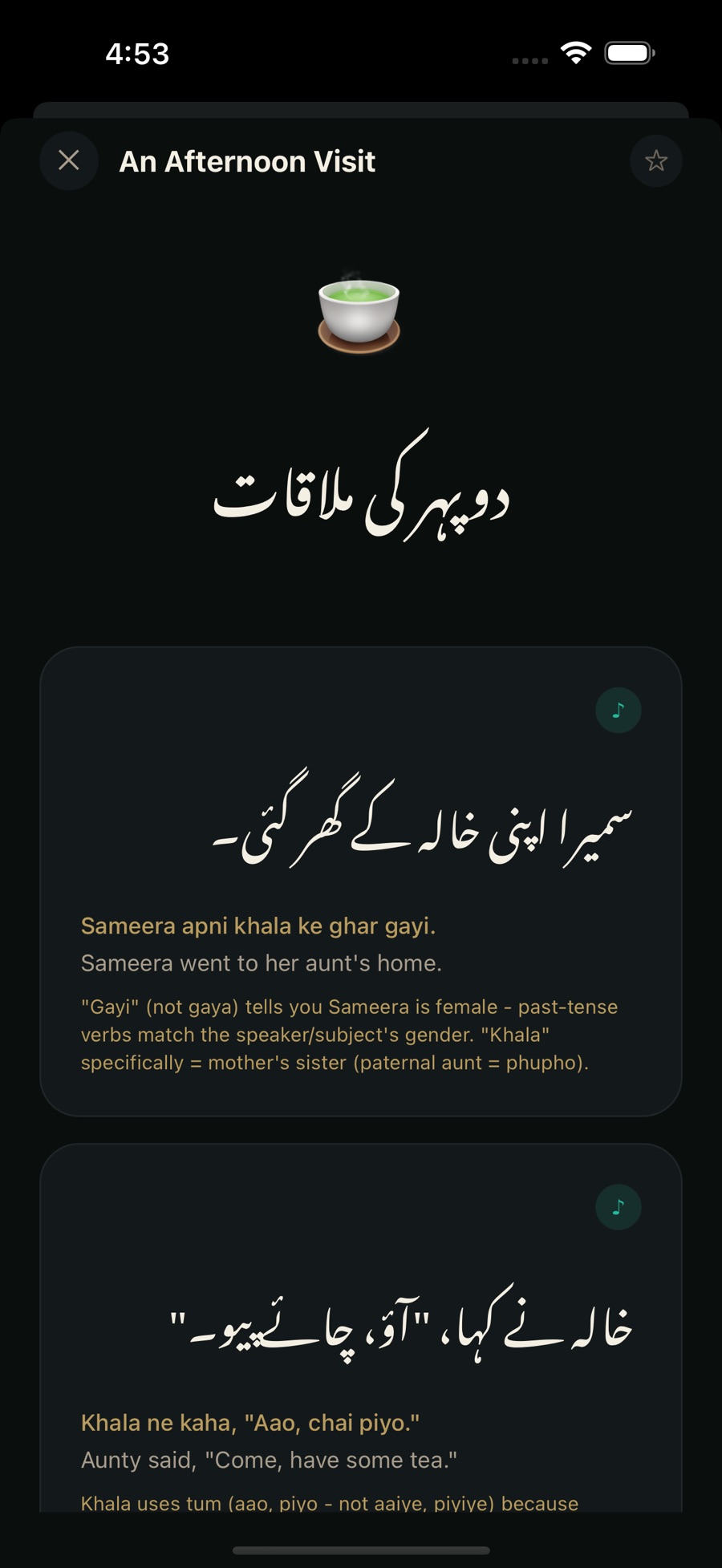
BolNama is designed to be picked up and put down — a calm, intentional path rather than a streak treadmill.
The free tier includes the full alphabet and the first lessons. Learn each letter's four positional forms in the Nastaliq masterclass, with audio and real example words.
The Roman line — written the way your family already texts, like "aap kaise hain" — lets you speak immediately while the script line trains your eyes. Roman fades as your reading wakes up.
Meeting in-laws, Eid, weddings, condolences, chai time, numbers, emotions, daily life — heritage-relevant content, with cultural notes explaining why the language works the way it does.
FSRS spaced repetition schedules reviews so you spend up to thirty percent less time per word than older systems while still remembering it. Gentle haptics, full dark mode, no leaderboards, no guilt.
Free tier: the full alphabet and the first lessons — no payment needed to start.
Full library: unlock everything with a weekly subscription, a yearly subscription, or a one-time lifetime purchase, all handled through your Apple ID.
Subscriptions auto-renew at the price of the selected plan unless cancelled at least 24 hours before the end of the current period. Manage or cancel any time in your Apple ID account settings.
Yes — the free tier includes the full Urdu alphabet and the first lessons. The complete library unlocks with a weekly subscription, a yearly subscription, or a one-time lifetime purchase, all handled through your Apple ID.
No. Every phrase shows three lines: the full Nastaliq script, a diaspora-style Roman line such as "aap kaise hain" so you can sound it out from day one, and the natural English meaning. The Roman line fades as your reading develops, and a Nastaliq masterclass teaches every letter in all four positional forms.
Yes. Native Pakistani Urdu audio is bundled inside the app as static MP3 files, so every phrase plays even on a long flight with no signal. Two voices, male and female, are switchable in your profile.
Tap once and the same phrase rephrases for tum or aap, and for a masculine or feminine speaker. Instead of guessing whether to say kaise or kaisi with your aunt versus your cousin, the app shows you instantly.
No. Audio is generated using Microsoft Azure Cognitive Services Neural Text-to-Speech at build time and bundled as static MP3 files inside the app. No personal data is transmitted to any AI service while you use the app.
No. BolNama has a calm, intentional design — no streak treadmill, no public leaderboards, no social pressure. Gentle haptics, smooth animations and full dark mode. It is built to be picked up and put down, not to nag you.
It is built for English-speaking heritage learners — Pakistani diaspora in the UK, US, Canada and Australia who understand some Urdu around the family table but cannot confidently read, write or hold a conversation. It is also a clean entry point for total beginners.
Evergreen, practical reading for heritage learners and beginners — no app required.
A beginner's guide to Nastaliq: how letters connect, the four positional forms, and a realistic path to reading.
Why "kitchen Urdu" is a real head start, what usually goes wrong, and a practical roadmap back to fluency.
Who gets aap, who gets tum, why verbs change with the speaker's gender, and how to stop guessing.
How spaced repetition and the FSRS algorithm work, and how to apply them to Urdu words and script.
Script first, voice first, dignity first — the full alphabet and first lessons cost nothing.